
Why Choose Travertine for a Pool Deck or Patio?
Travertine is one of the most popular stones for pool decks, patios and walkways in the Conejo Valley. Here is why, how it compares to concrete, and what it takes to install it so it lasts.
By Steve & Angelo, Tile & Stone Installation · Published September 29, 2026
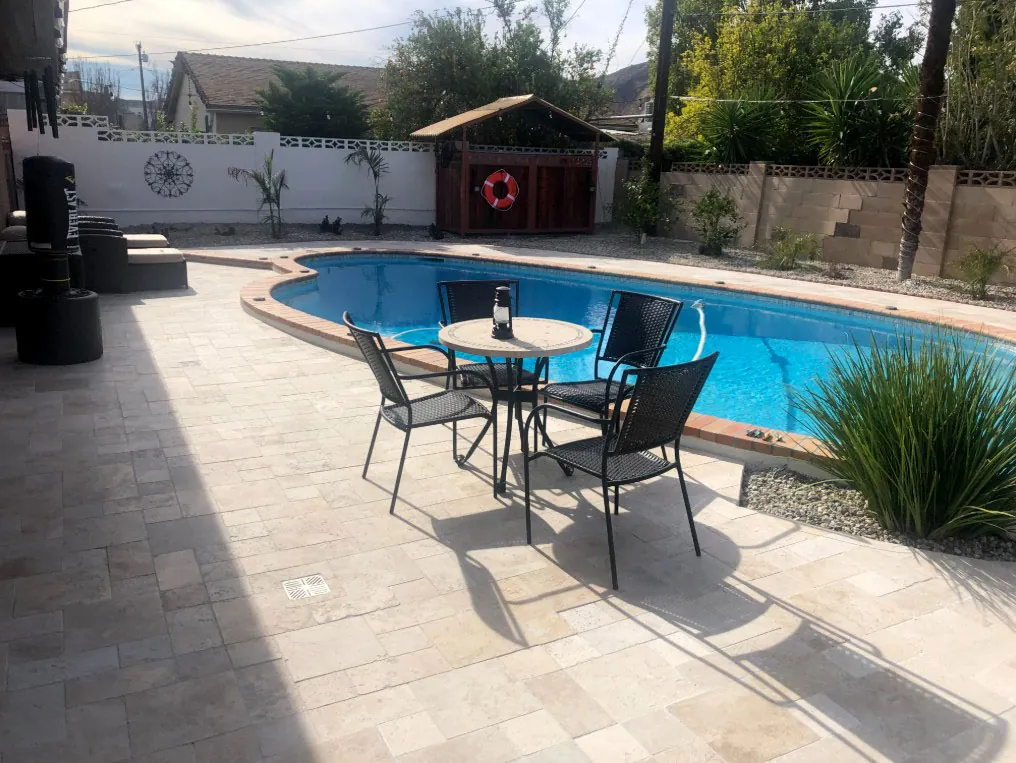
Why is travertine good for pool decks?
Travertine stays cooler underfoot than concrete, has a naturally slip-resistant surface, and looks better with age. It is a natural stone with small pores that help water drain from the surface, and a tumbled or brushed finish gives bare feet good grip around the pool. Its light, warm colors reflect sun instead of soaking it up, which matters on a hot Thousand Oaks afternoon. With a proper base and sealing, a travertine deck can last for decades.
We install travertine pool decks, coping, patios and walkways for homes across Thousand Oaks, Newbury Park, Westlake Village, Agoura Hills and Camarillo. See our pool deck and patio page for more of our outdoor work.
Why homeowners choose travertine
- Cooler surfaceLight stone reflects heat better than most concrete.
- Slip resistanceTumbled and brushed finishes grip when wet.
- Natural lookWarm, varied color that fits Southern California homes.
- Long lifeDurable stone that ages gracefully.
- Easy repairA damaged piece can be replaced without redoing the deck.
Travertine vs. concrete for a pool deck
Concrete usually costs less up front, but travertine is cooler, better looking and easier to repair. A poured concrete deck is one large slab, so cracks from ground movement run across it and are hard to hide; stained or stamped concrete also needs resealing and can fade. Travertine is laid as individual pieces, so if one cracks it can be swapped out. Travertine also stays cooler than most concrete finishes and does not have the painted-on look of some stamped concrete.
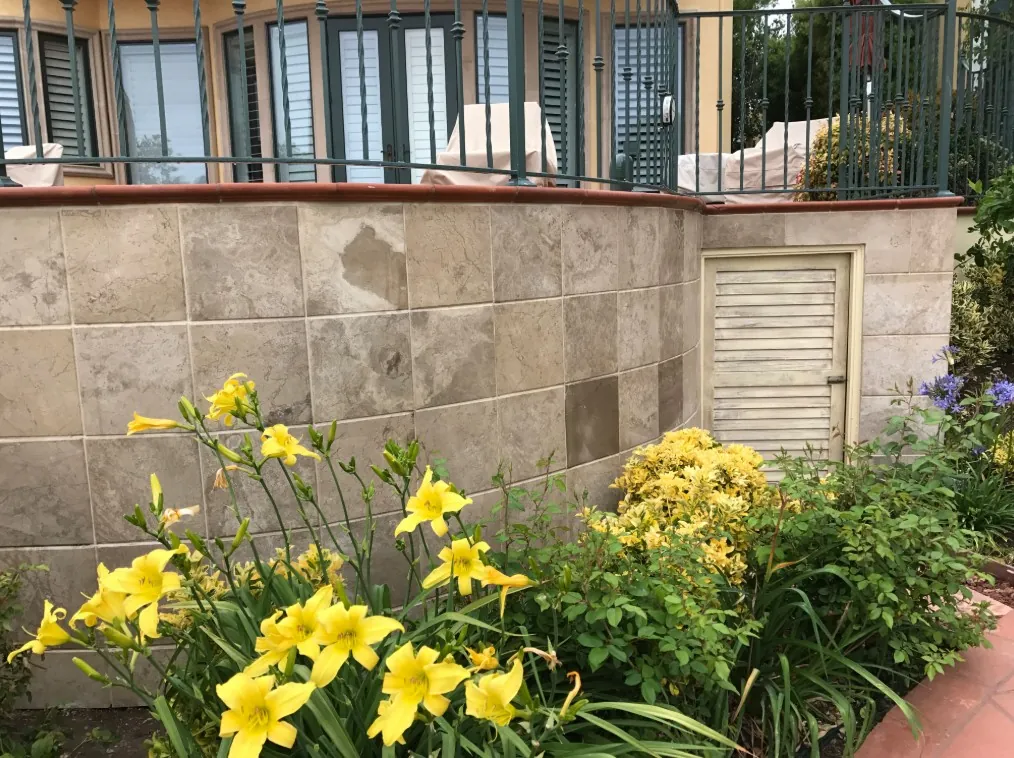
Travertine comes in pavers for decks and patios, and in matching bullnose pieces for pool coping and steps, so the whole area can be finished in one stone. We also work with other natural stone for walls and features; see our stonework page.
Travertine vs. concrete
- HeatTravertine: cooler. Concrete: often hotter, especially darker colors.
- CracksTravertine: replace one piece. Concrete: cracks run through the slab.
- LookTravertine: natural stone. Concrete: plain or stamped.
- Upfront costConcrete is usually less.
- Long-termTravertine ages well and is easier to repair.
What makes a travertine deck last?
Most outdoor stone problems come from what is underneath: a travertine deck is only as good as its base and drainage. The ground is prepared and compacted, the stone is set on a solid bed, and the surface is sloped so water runs away from the house and pool instead of pooling. Coping pieces around the pool are set firmly so they do not rock or loosen.
After installation, sealing helps the stone resist stains from leaves, sunscreen and pool chemicals and makes cleaning easier. Resealing every few years and rinsing the deck regularly keeps it looking its best. Sun, water and temperature swings are hard on any outdoor surface, which is why we take the base as seriously as the stone.
Signs of a quality install
- Compacted basePrepared ground that will not settle.
- Proper slopeWater drains away from the house and pool.
- Solid copingPool edge pieces that do not rock or shift.
- Tight, even jointsConsistent spacing and straight lines.
- Sealed stoneResists stains and makes cleaning easier.
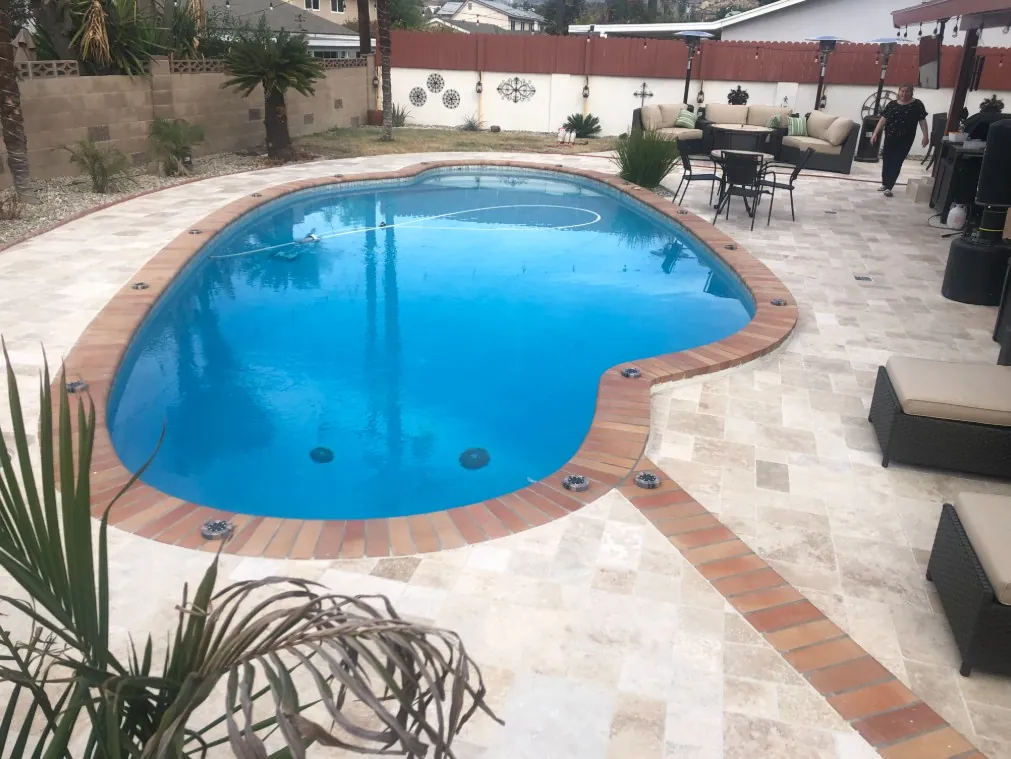
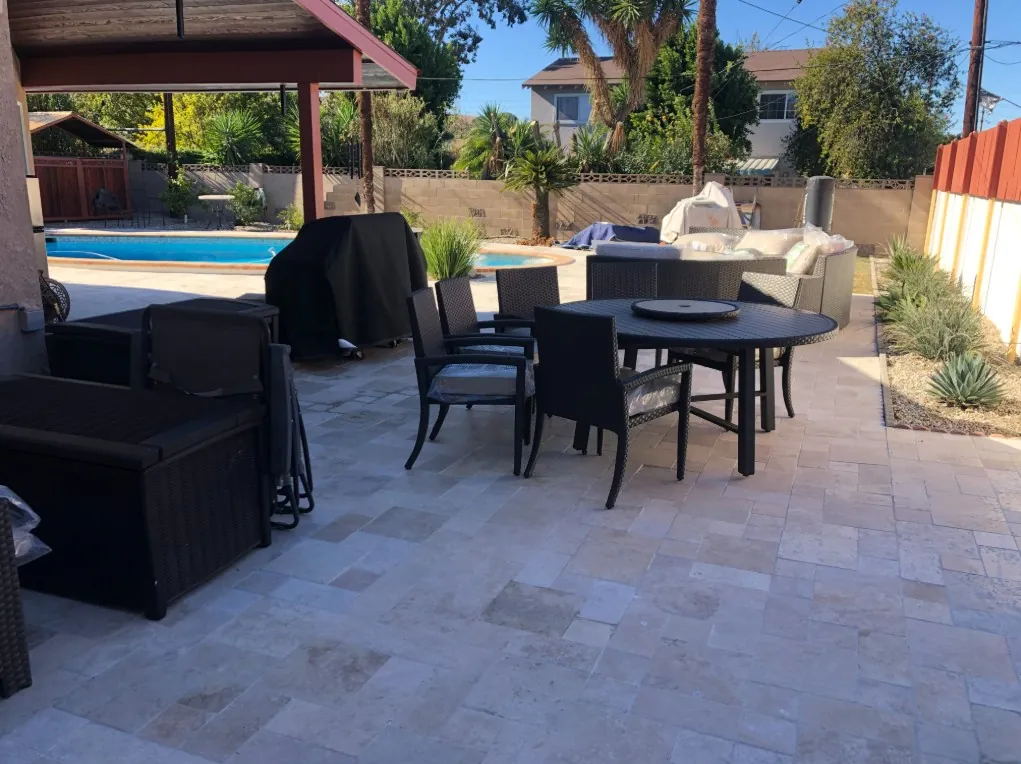
Travertine We've Installed
Travertine FAQs
Does travertine get hot in the sun?
It stays noticeably cooler than most concrete and dark pavers, especially in lighter colors, which is why it is so popular around pools.
Is travertine slippery when wet?
Tumbled and brushed travertine has a textured surface that grips well when wet. Polished travertine is not recommended outdoors.
Does a travertine deck need sealing?
Sealing is recommended. It helps the stone resist stains and makes cleaning easier. Resealing every few years keeps it protected.
Do you install concrete pavers?
No. Outdoors we work with travertine and natural stone, which is where our experience is.
How much does a travertine pool deck cost?
It depends on the area, the stone, the coping and the site prep. Estimates are available on request; text photos to 805-341-5986.
Thinking About a Travertine Deck?
Text Steve & Angelo a few photos of your pool or patio area. We will tell you what it takes to do it right.