
Replacing Carpet or Laminate with Tile: What to Expect
Swapping worn carpet or laminate for tile is one of the most lasting upgrades you can make, especially in entryways, hallways, mudrooms and laundry rooms. Here is what the job involves, step by step.
By Steve & Angelo, Tile & Stone Installation · Published September 29, 2026
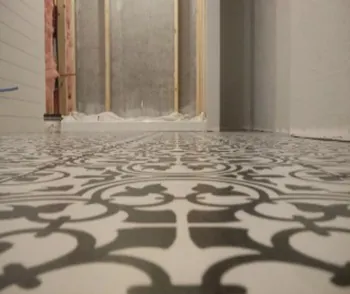
Is it worth replacing carpet or laminate with tile?
In high-traffic and wet areas, yes: tile outlasts carpet and laminate by decades and is far easier to clean. Carpet traps dirt and wears into paths, and laminate can swell and peel when it gets wet. Porcelain tile and natural stone stand up to muddy shoes, pets, spills and daily traffic, and only need sweeping and mopping. That is why entryways, foyers, hallways, mudrooms and laundry rooms are the most common places homeowners switch to tile.
The key is preparation. Tile needs a solid, flat base, so the job is as much about what happens under the tile as the tile itself. See our tile floor installation page for the areas we cover.
Best rooms to switch to tile
- Entryways & foyersFirst thing guests see; takes the most dirt.
- MudroomsWet boots, pets and gear.
- HallwaysConstant foot traffic.
- Laundry roomsSpills and the occasional leak.
- Kitchens & bathsWater, grease and daily cleaning.
What happens during the job?
A typical carpet-to-tile job has four stages: tear-out, subfloor prep, tile setting and grouting. First we remove the carpet, pad and tack strip, or the laminate and its underlayment. Then we check the subfloor: on a concrete slab we look for cracks and high or low spots; on a wood subfloor we check for stiffness and add backer board where needed. Next we lay out the room so cuts land in less-visible places and set the tile. Finally we grout, clean and add transitions where the tile meets other floors.
We do not set tile over old flooring. Removing everything down to the subfloor is the only way to make sure the new floor is flat and will not crack. Our tear-out and surface prep work is part of every job.
The four stages
- 1. Tear-outOld carpet, pad, tack strip or laminate removed and hauled off.
- 2. Subfloor prepCracks repaired, low spots leveled, backer board where needed.
- 3. Setting tileLayout planned first, then tile set flat and even.
- 4. Grout & finishGrout, cleanup and transitions to other floors.
- Cure timeShort wait before heavy use, which we explain up front.
What changes when you switch to tile?
The biggest surprises are height and transitions. Tile with its setting bed can sit higher or lower than the old carpet, so doors may need trimming and baseboards may need adjusting. Where the new tile meets carpet or wood in the next room, a transition strip or a flush threshold finishes the edge cleanly.
Choose tile for the room. For entryways and mudrooms, a textured or matte porcelain gives better grip when wet, and a mid-tone color with a matching grout hides everyday dirt. Many homeowners run one tile through the entry, hall and laundry for a seamless look. If the rest of the house is wood, we also install hardwood floors, so the transitions are planned together.
Plan ahead for
- Door clearanceDoors may need trimming for the new floor height.
- BaseboardsRemoved and reset, or replaced.
- TransitionsClean edges where tile meets carpet or wood.
- Slip resistanceMatte or textured tile for wet entries.
- Grout colorMid-tone grout hides everyday dirt.
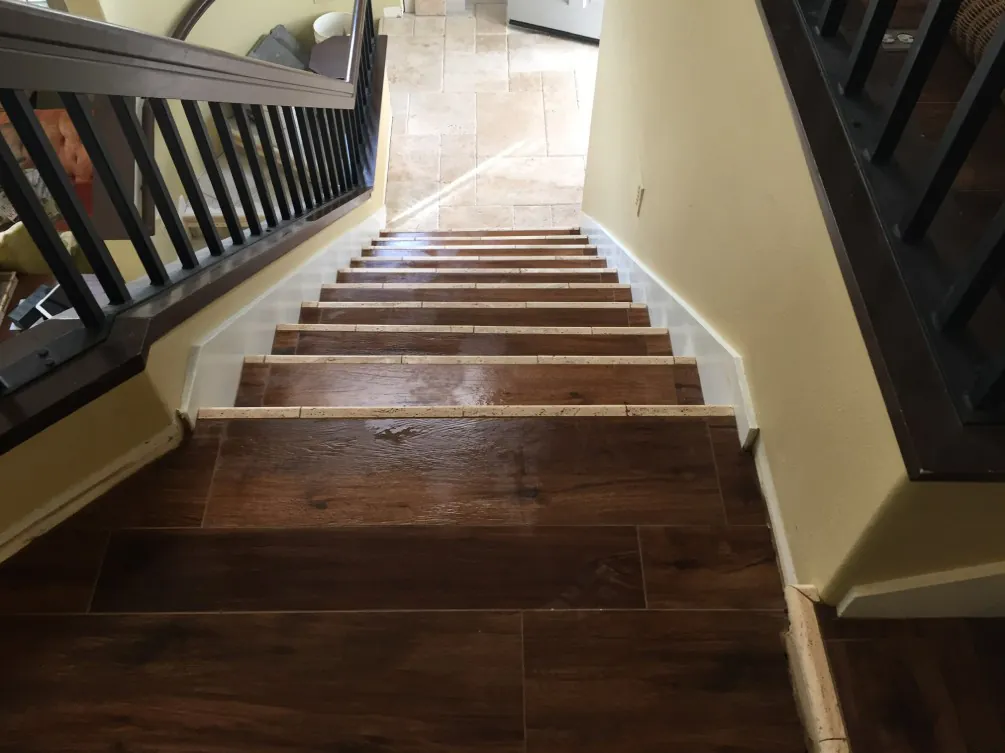
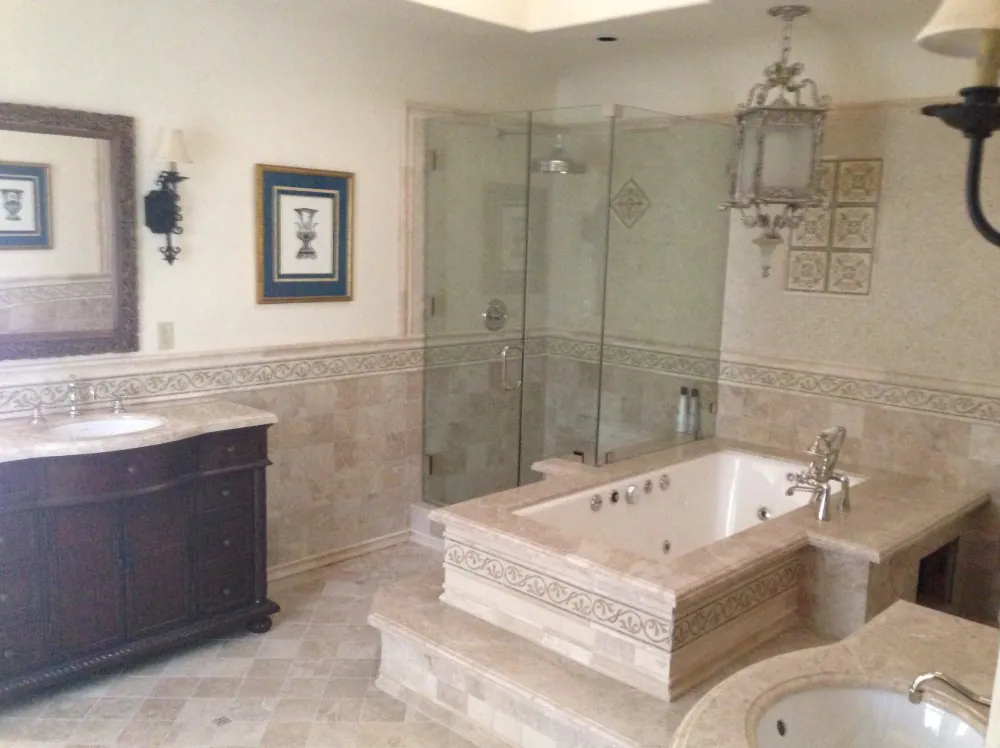
Tile Floors We've Installed
Carpet-to-Tile FAQs
Can you put tile over laminate or vinyl?
No. We remove the old flooring first. Tile needs a solid, flat base, and setting it over a floating or soft floor leads to cracked tile and grout.
How long does it take?
An entryway or laundry room is often a few days from tear-out to grout. Larger areas and long hallways take longer. We will give you a realistic timeline when we see the space.
What tile is best for an entryway or mudroom?
Porcelain is the most durable choice. A matte or textured finish is safer when wet, and a mid-tone color hides dirt. Travertine and other stone also work well when sealed.
Can one tile run through the whole house?
Yes. Running one tile through the entry, halls and laundry gives a seamless look, and we plan the layout so it lines up from room to room.
How much does it cost to replace carpet with tile?
It depends on the area, the tile, and the condition of the subfloor. Estimates are available on request; text photos to 805-341-5986.
Ready to Replace a Worn Floor?
Text Steve & Angelo a few photos of the room. We will tell you what it takes to replace it with tile that lasts.